
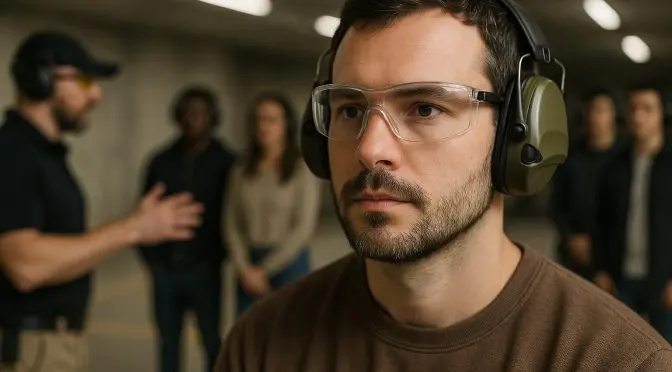
Check the range's current commands and posted procedures before packing your gear. This prevents arriving unsure when a lane is active, where firearms may be handled, or how a ceasefire is announced. A strong club culture makes those answers easy to find and gives new participants a clear way to ask questions. The result is a calmer, more welcoming place for practice, instruction, and responsible participation.
Set the safety standard before joining a firing line
Safety culture is visible in ordinary behavior. Members keep muzzles pointed in a safe direction, keep fingers outside the trigger guard until ready to fire, and treat every firearm as if it is loaded. They also pause when uncertain instead of trying to solve a problem quickly.
A good club does not leave these expectations to personal interpretation. Safety briefings, posted commands, range officers, and consistent enforcement give everyone the same reference point, especially when experience levels vary or a visitor is learning unfamiliar routines.
Find clear answers to practical questions: Who controls a ceasefire? Where do unloaded firearms go? May a case be opened at the bench? What should happen if a firearm malfunctions? If the answers are difficult to locate, ask before shooting. A responsible response should be direct, not dismissive.
Learn the range procedures before handling equipment
Gun range safety procedures can differ in meaningful ways. One facility may require firearms to remain cased until a designated point. Another may use specific commands for making the line safe, checking that actions are open, or returning to the firing position. Never assume a familiar routine applies everywhere.
Read the posted rules and listen to the briefing, even if you have used other ranges. Confirm where eye and hearing protection are required, how targets are placed, and what to do during a ceasefire. Keep equipment organized so you are not searching through a bag while others wait or the line changes status.
If a firearm stops functioning, keep it pointed safely downrange and alert the range officer or staff member. Do not turn around with it, carry it off the line, or attempt an unfamiliar repair while people are nearby. Stop, communicate, and wait for direction.
Use training to close the gaps that rules cannot cover
Basic firearm safety training should cover more than loading and firing. Useful instruction includes safe handling, storage awareness, identifying the operating controls on the firearm being used, responding to a stoppage, and understanding range commands. Students should leave knowing when to stop and ask for help.
Choose instruction based on the actual gap. Someone unfamiliar with a particular firearm may need a hands-on orientation before a general marksmanship class. Someone returning after a long break may benefit from a supervised refresher. A new member who understands handling but struggles with range communication may need practice with procedures and etiquette rather than more shooting drills.
Ask how the instructor manages safety, what equipment is required, and what happens if a student becomes uncomfortable or confused. Training should support sound judgment, not pressure people through uncertainty. If you cannot explain the next safe step, pause the session.
Make range etiquette predictable for everyone
Range etiquette is safety in social form. Keep conversations quiet enough for commands to be heard. Avoid handling a phone, bag, or firearm during a ceasefire unless the posted procedure allows it. Do not comment on another person's ability, equipment, or pace unless they invite useful help.
Leave the bench orderly, dispose of targets and materials as directed, and report unsafe conduct without creating a confrontation. Be factual: identify what happened, where it happened, and whether anyone may be at risk. Let the range officer handle enforcement.
New shooters may need more time to load, adjust a stance, or understand a command. Experienced members strengthen the club by giving them room to learn. Patience is not a substitute for safety correction, but corrections can be brief, calm, and specific.
Verify Salt Lake City rules instead of relying on memory
Local firearm requirements, transport rules, age-related provisions, permitted locations, and range policies may change. Utah and Salt Lake City rules should be checked through current official government guidance and the facility's posted requirements before a visit. A general internet summary, old forum answer, or another member's advice may be incomplete.
Separate three questions: what state law allows, what local requirements apply, and what the range permits on its property. These answers are not always identical. A lawful item may still be prohibited by a facility rule, and a range procedure may be stricter than the minimum legal standard.
Check requirements affecting your situation before traveling. These can include identification, supervision, transport, storage, ammunition, and whether a particular activity requires prior approval or instruction. When the answer is unclear, contact the relevant official source or the range directly. Treat legal information as subject to change, not a permanent checklist.
Use this pre-session safety checklist
Before joining a firing line, confirm each point:
– You know the current range commands and ceasefire procedure.
– Your eye and hearing protection are available and suitable for the facility.
– The firearm is unloaded and safely cased or stored according to posted rules.
– You understand where ammunition and equipment may be handled.
– You know whom to contact if there is a malfunction or unsafe condition.
– You have checked current legal and facility requirements for your situation.
– You are prepared to stop if you feel confused, rushed, or distracted.
The last item deserves attention. A strong shooting club does not measure participation by time on the line or rounds fired. It measures maturity by whether members communicate, follow procedures, accept correction, and keep uncertainty from becoming an accident. That standard welcomes beginners while giving experienced shooters a clear responsibility: make safe behavior ordinary, visible, and easy to repeat.